

Taylor Hamada (Kyoto)
There is something special about opening a bento in Japan. The moment the lid lifts, you see neat rows of food tucked inside: bright vegetables, golden omelets, shiny rice grains. Each box feels like more than lunch. It carries care, comfort, and creativity all in one.
For one ALT, bento became the answer to a problem she had not expected. In her first year, she joined her students for kyuushoku, school lunch. It was fun at first: sharing the same meals with students, tasting new flavors, and enjoying the sense of community. But after a while, the afternoons grew difficult. She often felt too full, sometimes even sick, and found herself arriving late to class.
At first, she thought the portions were simply too big. Eventually, she realized her body was reacting to food sensitivities. The solution was simple: bring her own bento to school.
What started as a necessity soon became a daily ritual. The night prior, she packed exactly what she needed: non-acidic foods, gentle proteins, and just enough rice. Instead of worrying about how she would feel, she could look forward to lunch. Her students and coworkers noticed too, leaning over to peek and ask, “What’s that?” or “Did you cook it yourself?” Her lunchbox had become a conversation starter, one more way to connect across cultures.
Of course, there are many reasons why teachers bring their own meals, and the benefits go beyond health. Some enjoy arranging colorful boxes, while others simply pack leftovers before rushing out the door. Both approaches work just as well.
Why Bring a Bento?
- Some schools do not provide lunch.
- Food sensitivities or allergies make school meals difficult.
- Portion control is easier when you prepare your own.
- Packing lunch saves money over time.
- Homemade food offers comfort and familiarity.
- You can plan meals around your personal health goals.
- Reimagining leftovers so they don’t go to waste.
Here are a few snapshots from current and former JETs, to possibly serve as “bento inspo” for your own lunchtime ideas:
“I make bentos for my husband (and coworker) to enjoy during summer vacation and other long breaks when school lunch isn’t provided to us.” – Taylor
Bento 1
Three flavors of rice: Salmon, shiso, and soy sauce. Umeboshi, bacon-wrapped asparagus, pan-fried sausage, rolled omelette, leftover pasta, mackerel, candied sweet potatoes, and meat-wrapped potatoes. Topped with various veggies, like cucumber and pickled daikon, to add color.
Bento 2
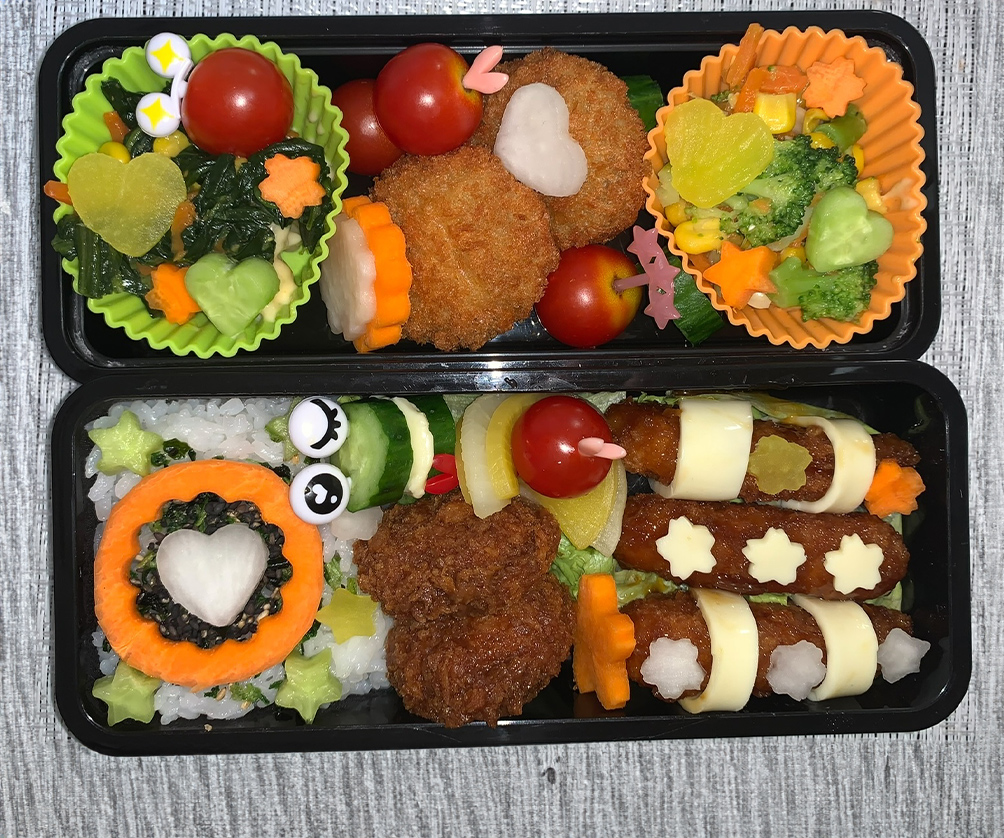
Leftover side salads, crab cream croquettes, chicken fingers wrapped in cheese, and breaded hamburger meat. All on top of white rice and topped with pickled daikon, carrots, and tomatoes, and seaweed to create a design.
Bento 3
Two flavors of rice: soy sauce and shiso, topped with grilled chicken. Leftover green bean casserole, steamed sweet potatoes, salmon, chikuwa, and corn slices. Two hotdog octopi with black sesame seeds as eyes, and decorated with shaped cheese and pickled daikon.
Bento 4
Two pan-fried onigiri with seaweed spelling “I like you” in Japanese. Mini omelette with ketchup, chicken fingers, and two hamburger steaks topped with cheese. Three different kinds of side salads and leftover pasta, all decorated with lettuce, tomatoes, and cut-out cheese and pickled daikon.
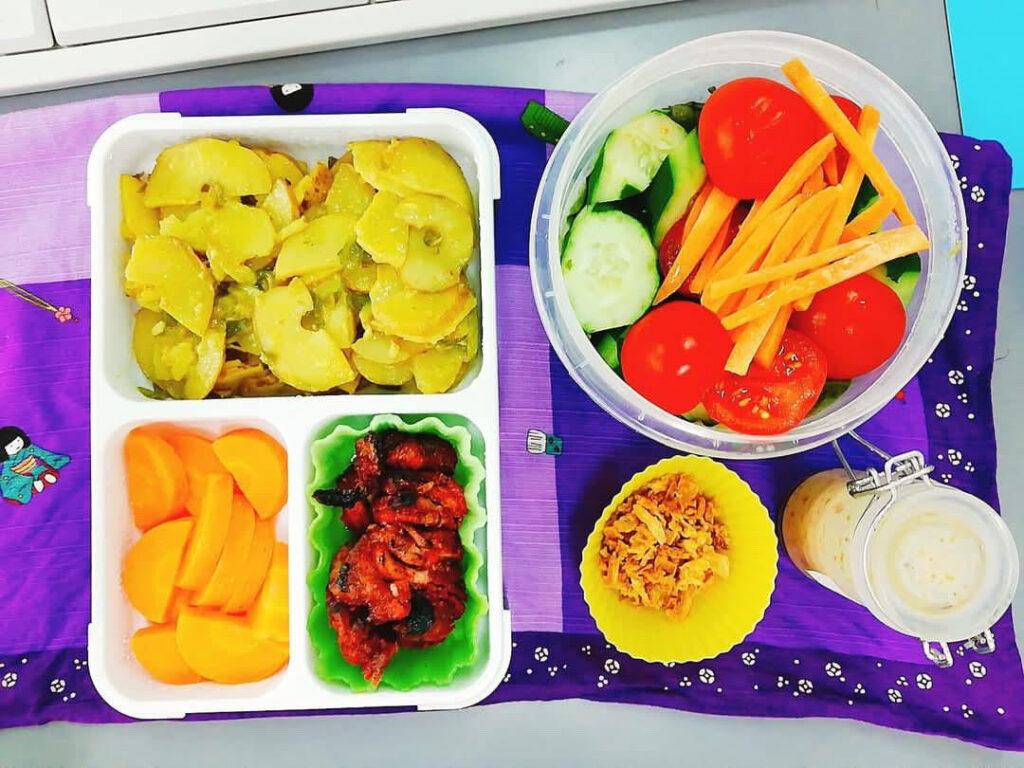
Joanna
Curried potatoes, tandoori-spiced chicken, steamed carrots, and a side salad with fried onion bits and roasted sesame seed dressing.
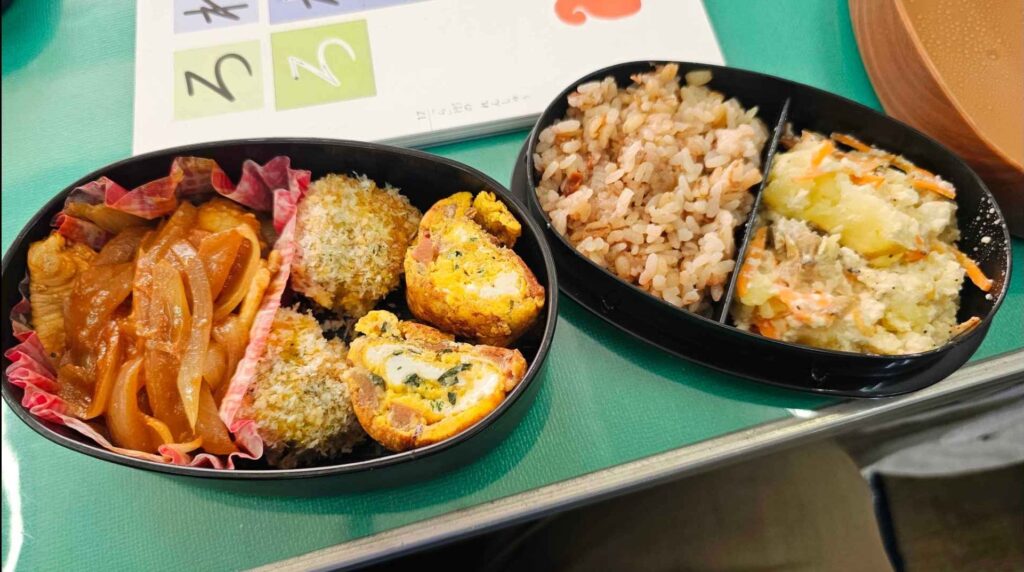
Adam
Pickled plum rice, yangnyeom chicken, cheese-filled pumpkin croquettes, spinach and bacon omelet, and sweet potato salad.
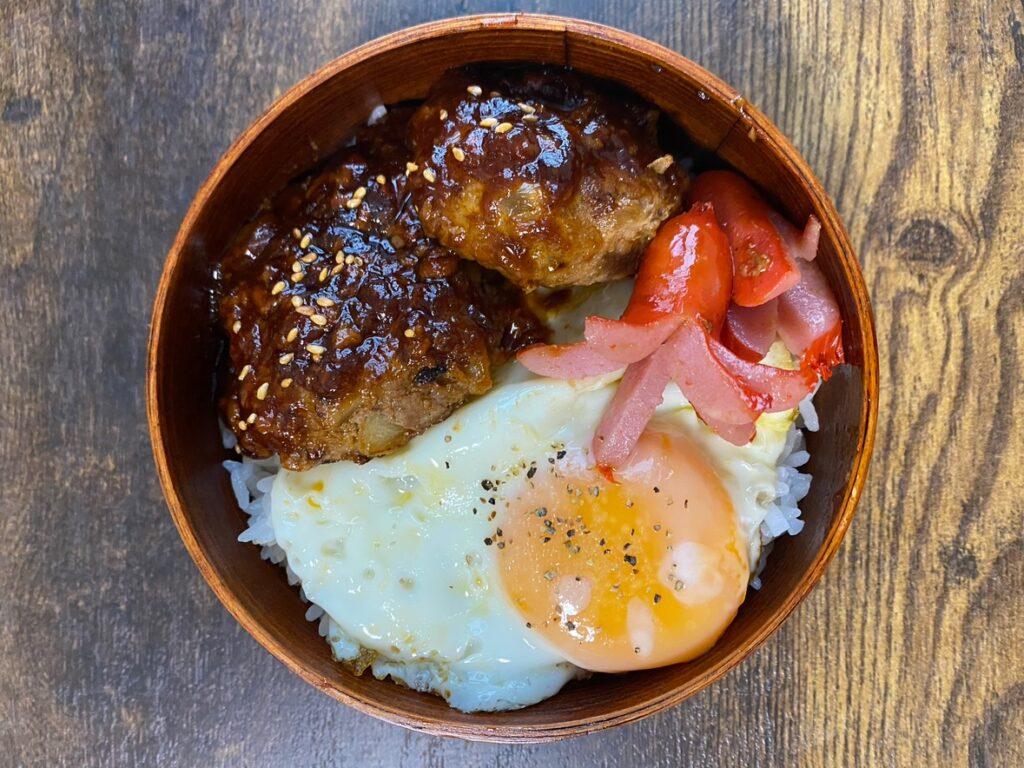
Jenny
Rice with homemade hamburg with some tako sausages and an over-easy egg.
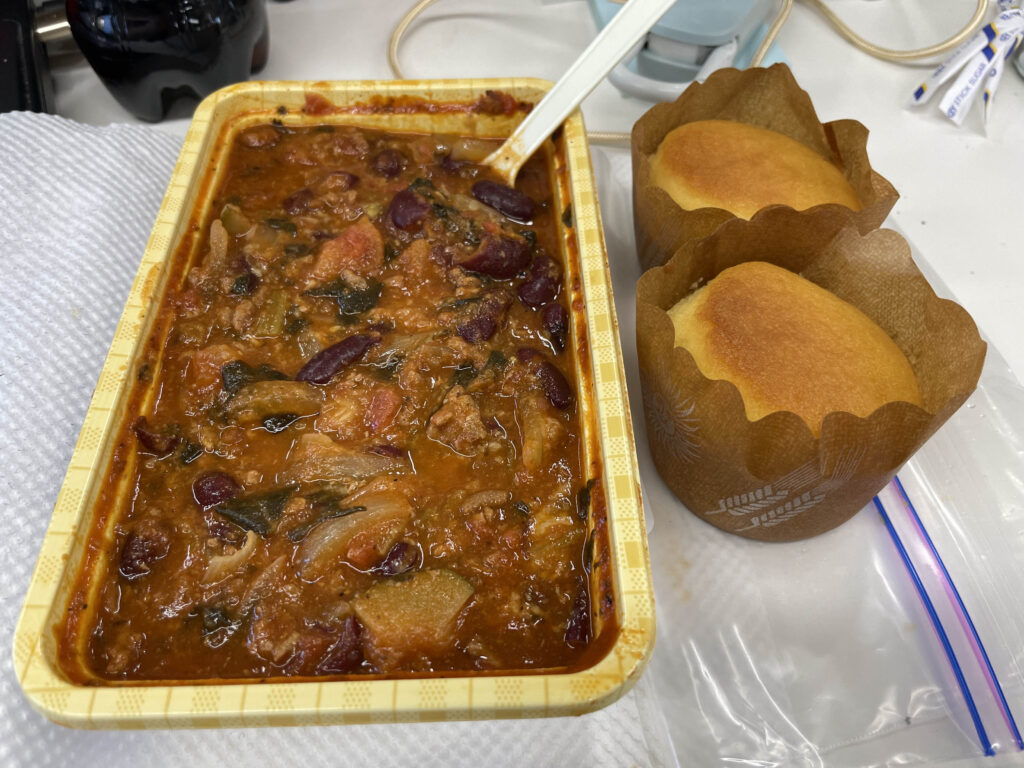
Canzada
Rice with homemade hamburg with some tako sausages and an over-easy egg.
Each box is a reflection of the person who made it. Some are bright and colorful, others are simple and practical, but all are chosen with care.
In the end, a bento is not just a lunchbox. It is a way to nourish yourself, find comfort, and bring a little piece of home into the middle of a busy school day. And sometimes, that little box is exactly what makes the day brighter.
Author Bio:
Taylor Hamada, a former JET Program ALT, is a Kyoto-based tour guide and school teacher supporting students with non-Japanese roots. She spends her free time buried in books, exploring Japan, and drinking matcha lattes.