


Clay with Character
Alayna Blaylock (Tokyo)
Please introduce yourself and where you’re from!
My name is Madeline Allman. I’m originally from El Paso, Texas in the US.
Where and what did you study before JET?
I studied at SUA (Soka University of America) and my major was Environmental Studies. I also took several pottery courses in college, one semester focusing specifically on Japanese Raku.
Where were you placed on JET and for how long?
I was placed in Toki City, Gifu Prefecture for 5 years. I found out I was placed in Gifu while sitting in my pottery class in California. When I told my teacher my placement, he immediately said, “Oh! That’s a pottery hotspot!”
What is your current career?
I am currently an English teacher, homeroom teacher, and study abroad program assistant at a private school in Gifu prefecture. I am also doing pottery semi-professionally. I have done pottery for 6 years now. I go to craft markets and am currently doing private sales.
What type of pottery or art do you make?
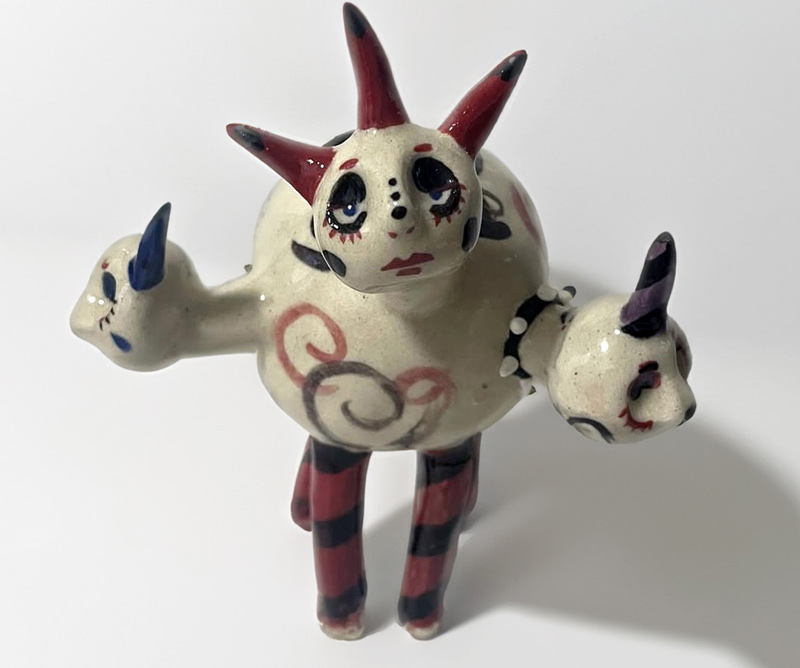
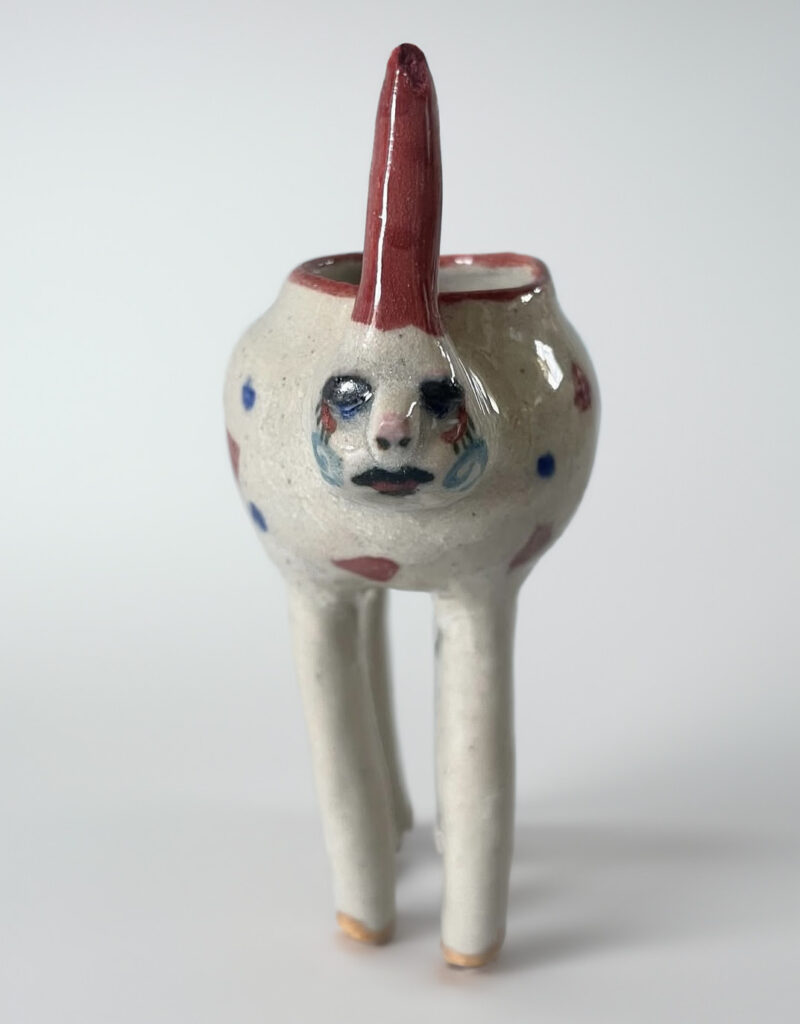
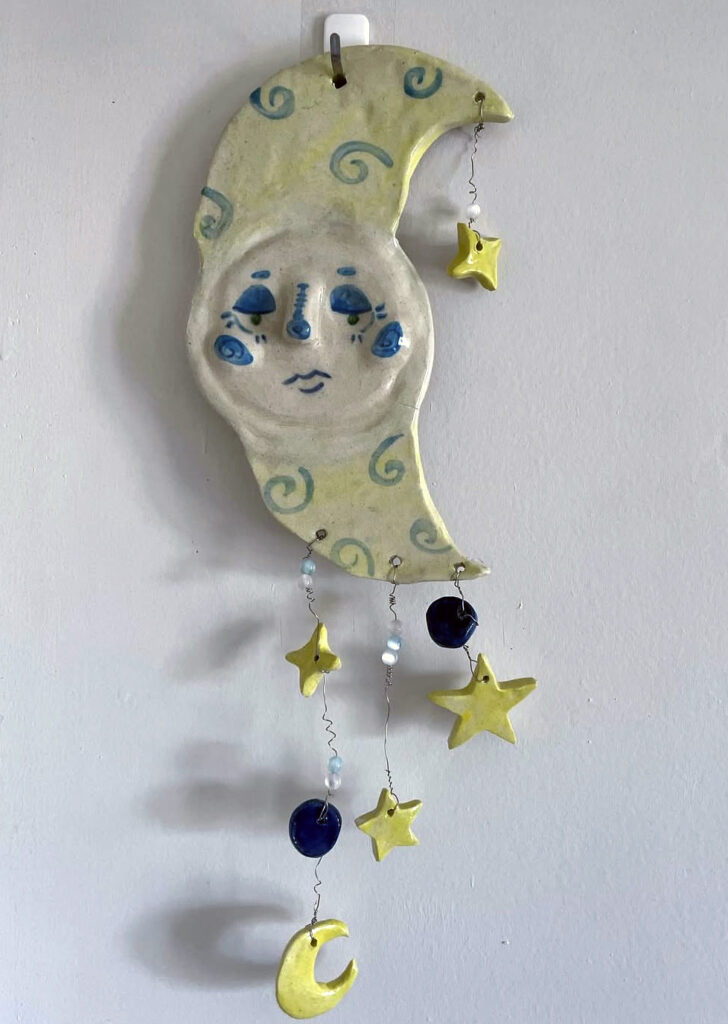
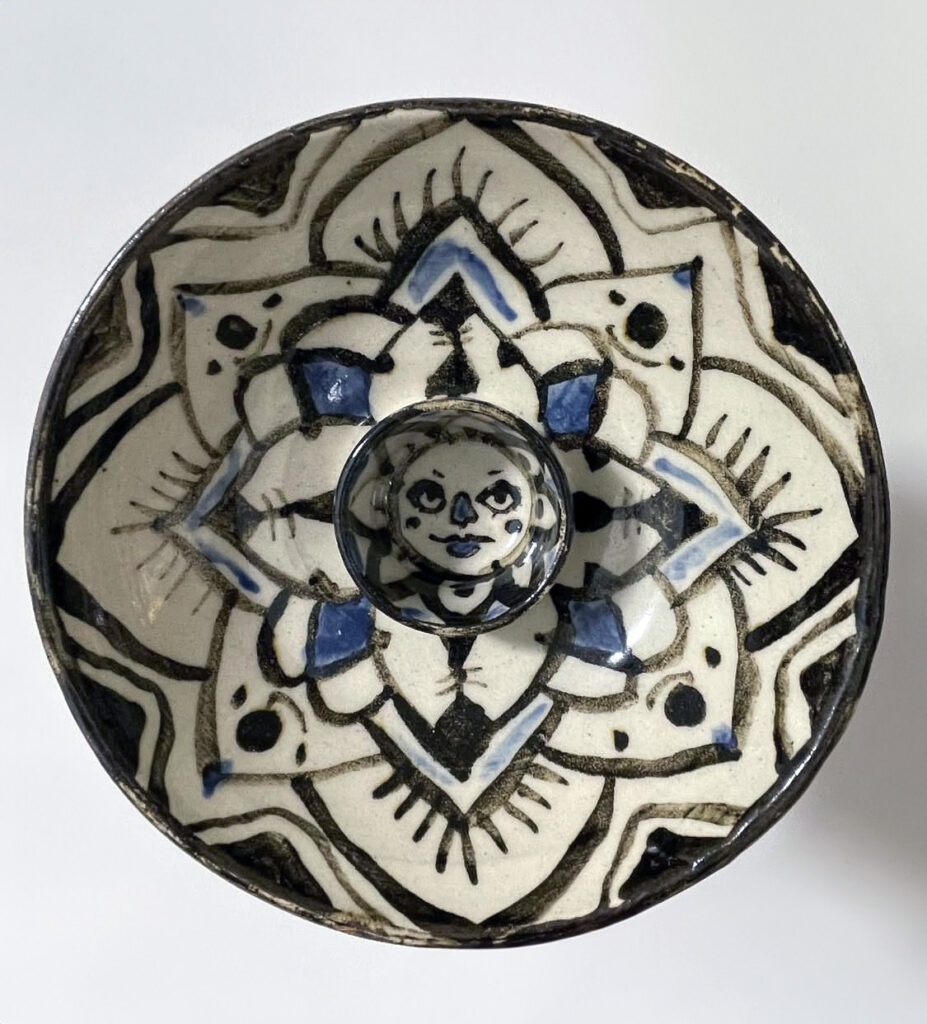
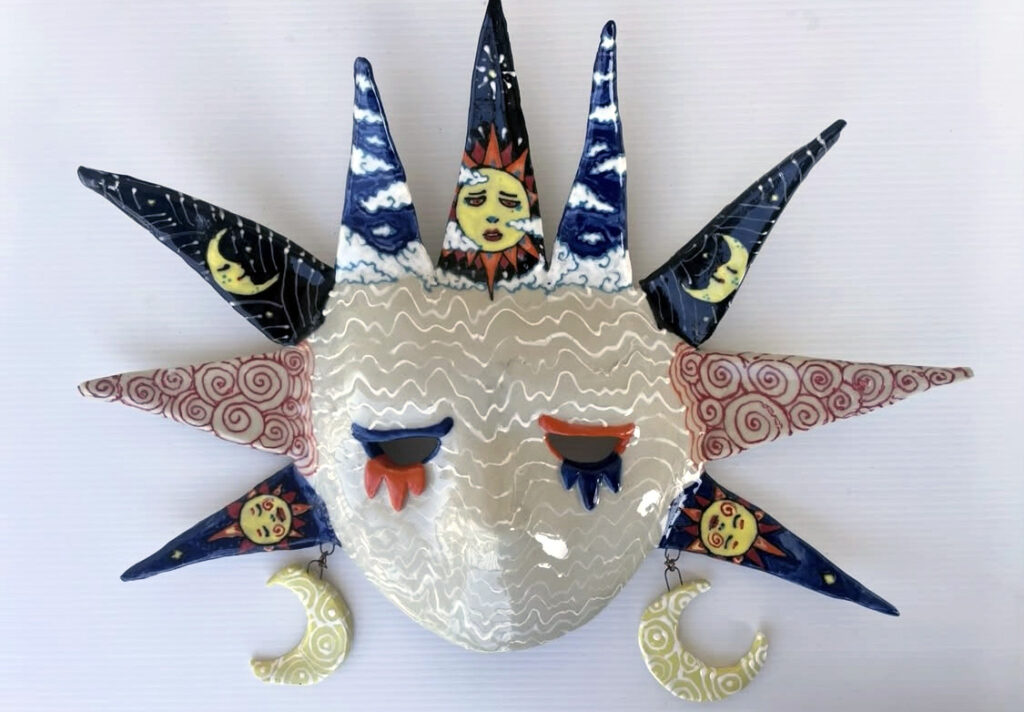
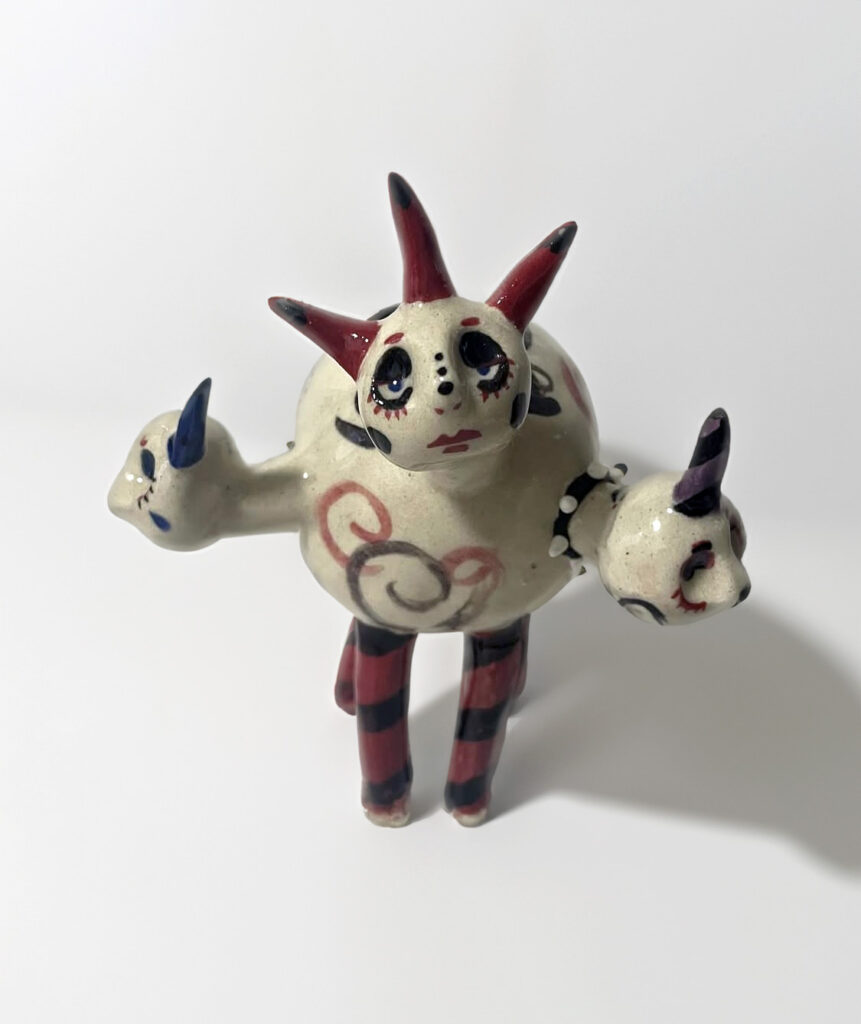
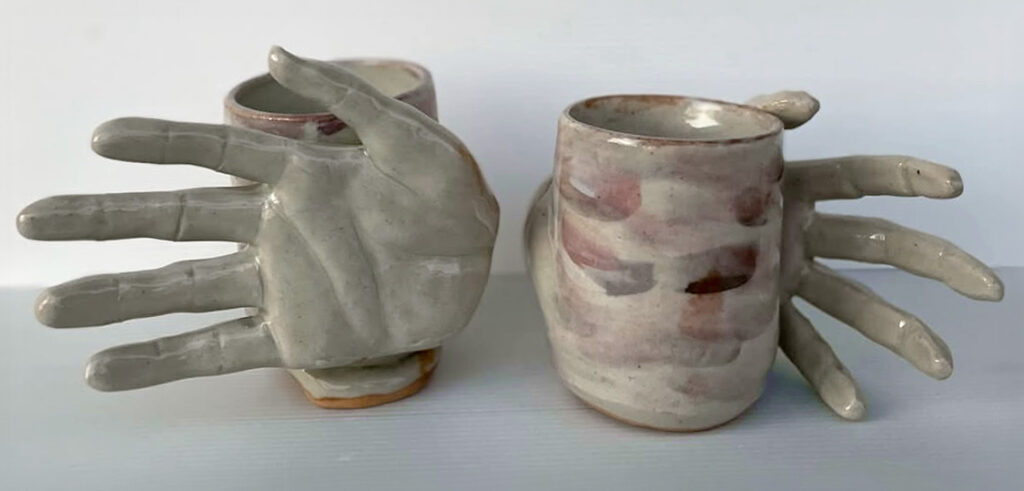
I usually do sculptures that serve a purpose. My best sellers are the「足長いね」(ashinagai ne) and “leggy babies.” I love coming up with different designs and poses to put the characters in. The longer the legs, the more the characters are ordered. My pottery club members freak out, so that’s fun too.
What are the steps that go into making your sculptures?
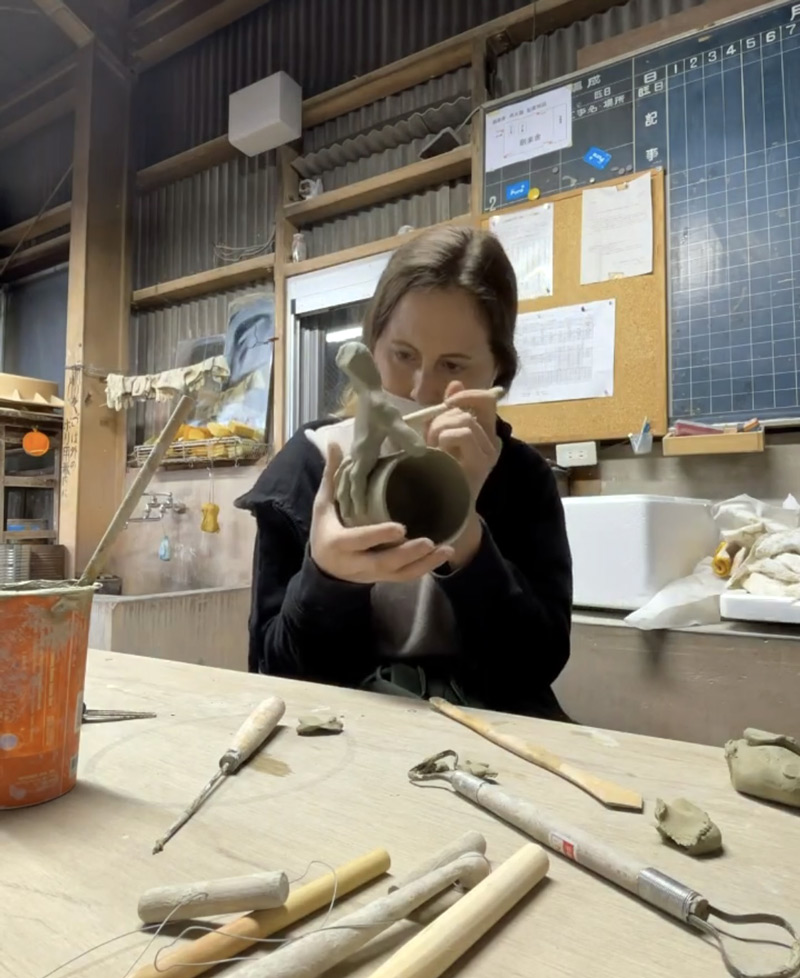
I usually start with a sketch. I draw on random papers throughout my work day. By looking at my doodles, I can usually extract a little character that I think I could make with clay. From there, I make the base (for the 足長いね this means making the body first, either through hand building two cups and connecting them or making a base on the pottery wheel).
Once the base is trimmed and leather-hard, I attach the legs and the head (or heads, depending on the character). The legs are very fragile, so making sure each step is done slowly and carefully is important. With pottery, you can’t rush. At the same time, if you wait too long, your piece can dry out, making it impossible to attach anything further.
Once the piece is sculpted, I can add details with smaller pieces of clay and underglaze. I can add underglaze either before the first firing or in between the first and second firing.
In my studio, we are responsible for every step of the pottery process. We take turns manning the kiln during a firing. Each shift is 12 hours long and can be quite tiring, but it’s really fun being able to hand glaze everything and pull things out of the kiln!
If things go well, I get a nice finished piece! If not. . . well, we try again! It’s just clay!
How did you get into pottery?
I took some pottery classes in college and have always been interested in it, but the community emphasis on it has helped me learn even more. Pottery in Gifu is everywhere! The walls, streets, bridge corners, bathrooms, murals, everything! The mayor even gave me several pottery pieces throughout my time working with him!
Kids make pottery often in schools, and some schools have their own kilns. The ones that don’t have kilns rely on the local community centers to fire them. During my time in JET, I became a member of a local pottery group. Now I have been a part of exhibitions throughout the prefecture with them. Most of the members are over 70 years old, with the oldest being in his 100s (he also used to be my next door neighbor)! My senior pottery club members motivate me. They are always challenging me to make more pottery and always burst out laughing when I end up making something they’ve never seen before. It is such a great community and I am beyond thankful to be a part of it!
What were some memorable experiences you had on JET and/or how did the JET experience as a whole shape who you are today?
The kids! The job itself could be a bit repetitive, but the kids made it worth it. Every time I got a letter or little origami creature from a kid, I was so happy! To this day, I still have all of those little gifts and letters. Whenever I’m having a bad day, I like to go through them and remember all of my students. One student in particular gave me a little flower on a random school day. I went home and carefully put the flower into one of those plastic picture films to try to preserve it. When I ended up leaving her school (we were unfortunately tossed around schools each year), she gave me a letter. I remember tears filling my eyes while reading “Please don’t cry. No matter what, we will always be together. I will always keep my memories of you in my heart. Please don’t forget me!” Several years later, she ended up being a student at one of my junior high schools. We both may have cried that day, but I will not confirm or deny this (I am currently in tears writing this). Today, that little flower remains taped onto my desk as a reminder of why I do my job.
How did JET help you in achieving your current career pathway or any professional endeavors?
JET gave me the experience of living and working in Japan. This really helped me when I ended up switching to my current job. It is not just about teaching, it’s about learning how to navigate living overseas and overcoming things that seem simple, like seeing a doctor and learning more about who you are and what you can do. I am forever thankful I was able to be a part of JET.
Do you have any advice for JETs who might be looking into a similar pathway after their time on the program?
Study! Make connections! Join clubs! Get everything you can out of this experience! If I had just gone home after work each day, I would not be living the life I am now! Reach out! Your community centers most likely have some sort of club you can join.
If you want to try pottery out, there are plenty of places that provide one-time classes. Some are on hand building, others are on the wheel, and others are just painting ready-made pieces! Talk to your neighbors, befriend the local FamilyMart worker, visit the local shrines, and talk to anyone and everyone you can! It feels really nice to be a part of the community.
I think it’s important to also cherish your friends. Since JET members tend to go back to their home country or move away for other opportunities, the time you have with them is sacred. Go on adventures together, buy a beaten up car and take road trips if you can, or take a train to nowhere. . . just live your life as much as you can.
For those wanting to start pottery, it sounds redundant, but just keep trying! My first cup was so off center it fell over. I’ve had pieces explode in the kiln. That’s part of the fun!
In the future, Madeline Allman hopes to make pottery professionally, expanding her business to selling overseas and in local stores. Her pottery will soon be sold in a local guest house. You can learn and see more of Madeline’s pottery on her Instagram page @tokidokipottery